Denim manufacturing for independent brands
Custom Streetwear Jeans Manufacturer
Agree the leg, then the wash
Jeans depend on two things you can't judge from a drawing: the cut and the wash. Choose the leg first, because it decides how the wash reads, then approve the fabric, wash and hardware together on a sample.
MOQ from 100 pairs per style and wash. Fabric, wash and construction requirements may change minimums.
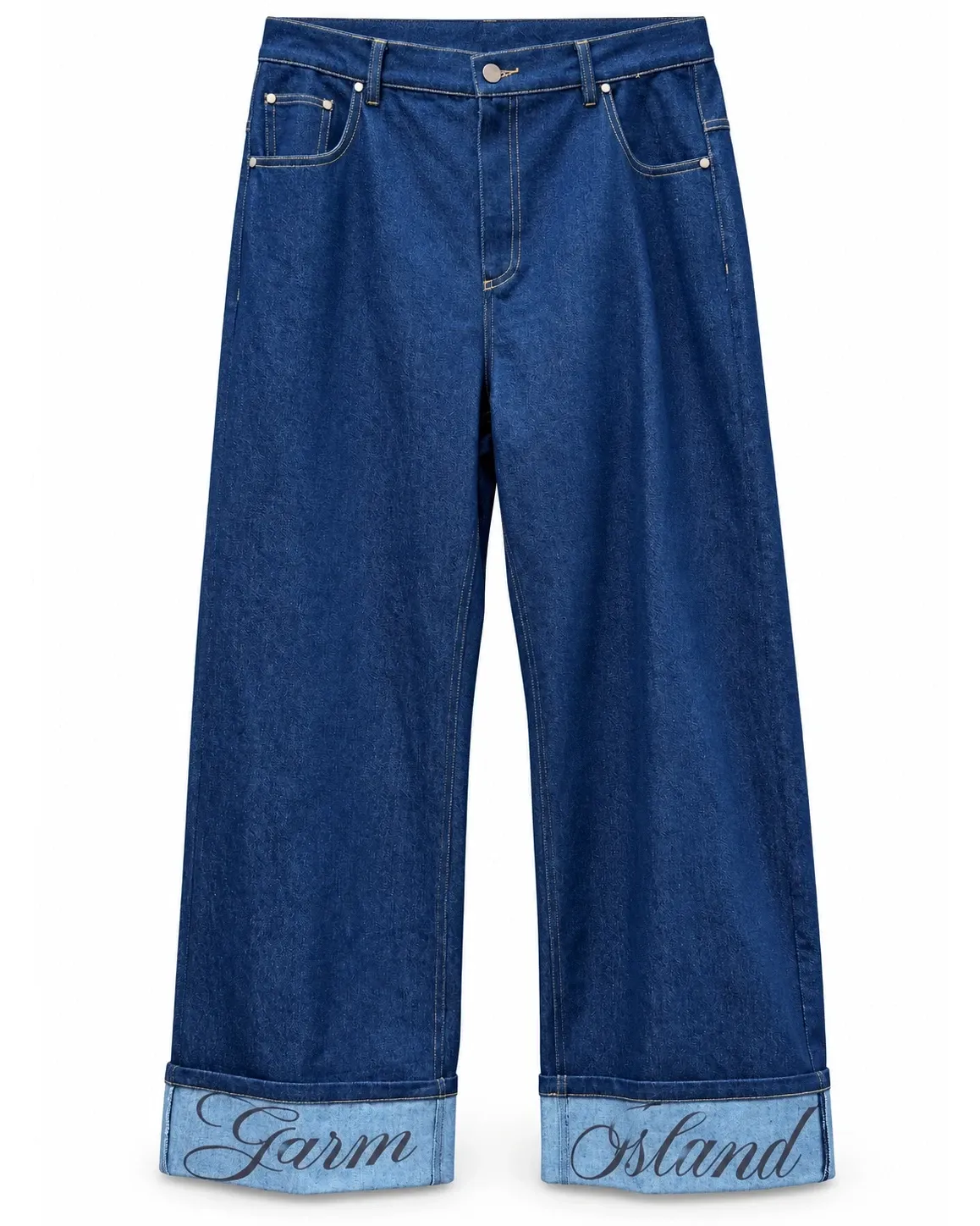
What to read in this garment
- Five-pocket front Coin pocket inside the front pocket
- Contrast stitching Light thread along the fly and pockets
- Wide leg Straight from hip to hem
- Turned-up cuff Lighter reverse with printed lettering
Compare the leg
Four jeans from the same five-pocket front
The front construction stays familiar. The leg is what makes the pair read as yours, so choose it before the wash.
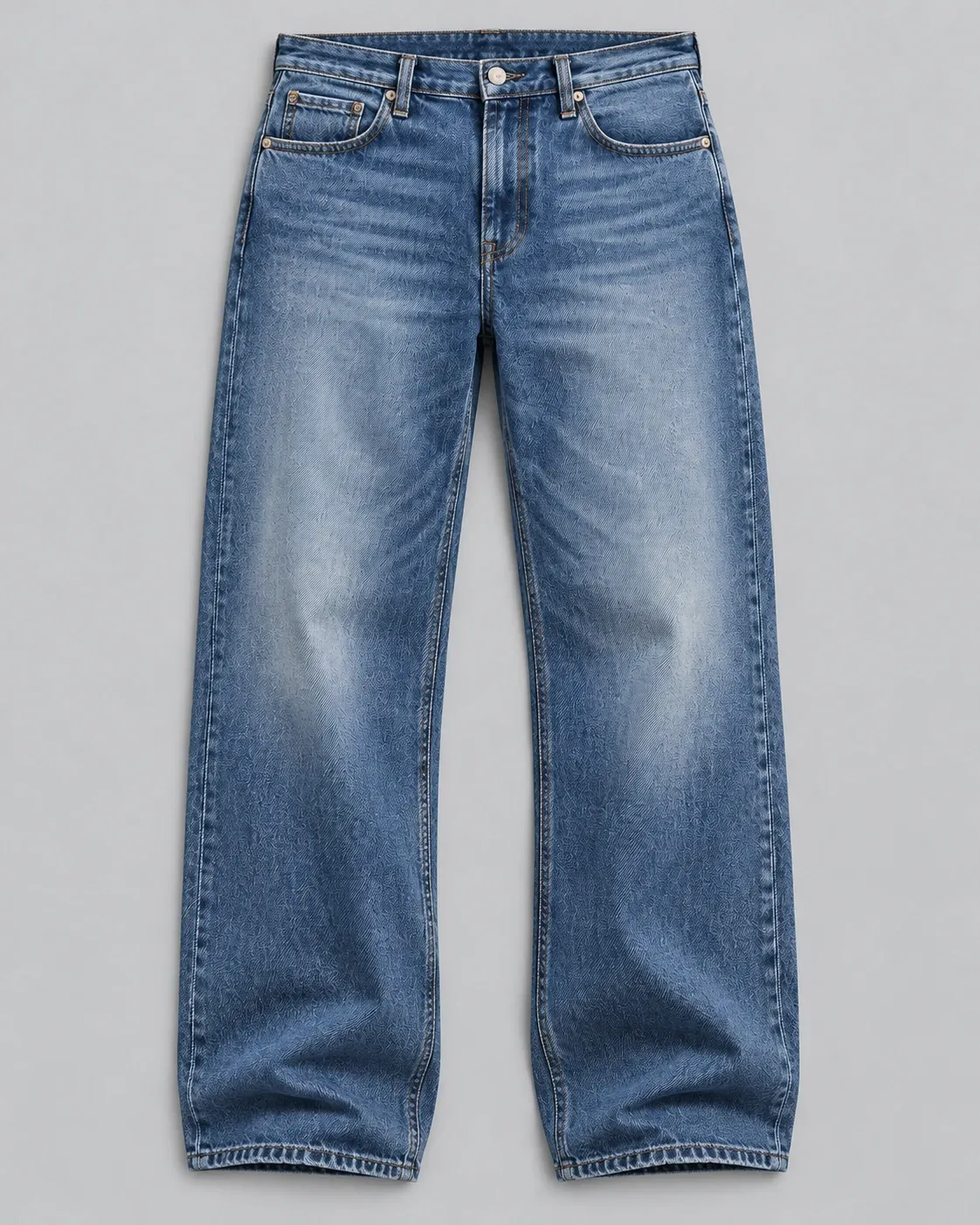
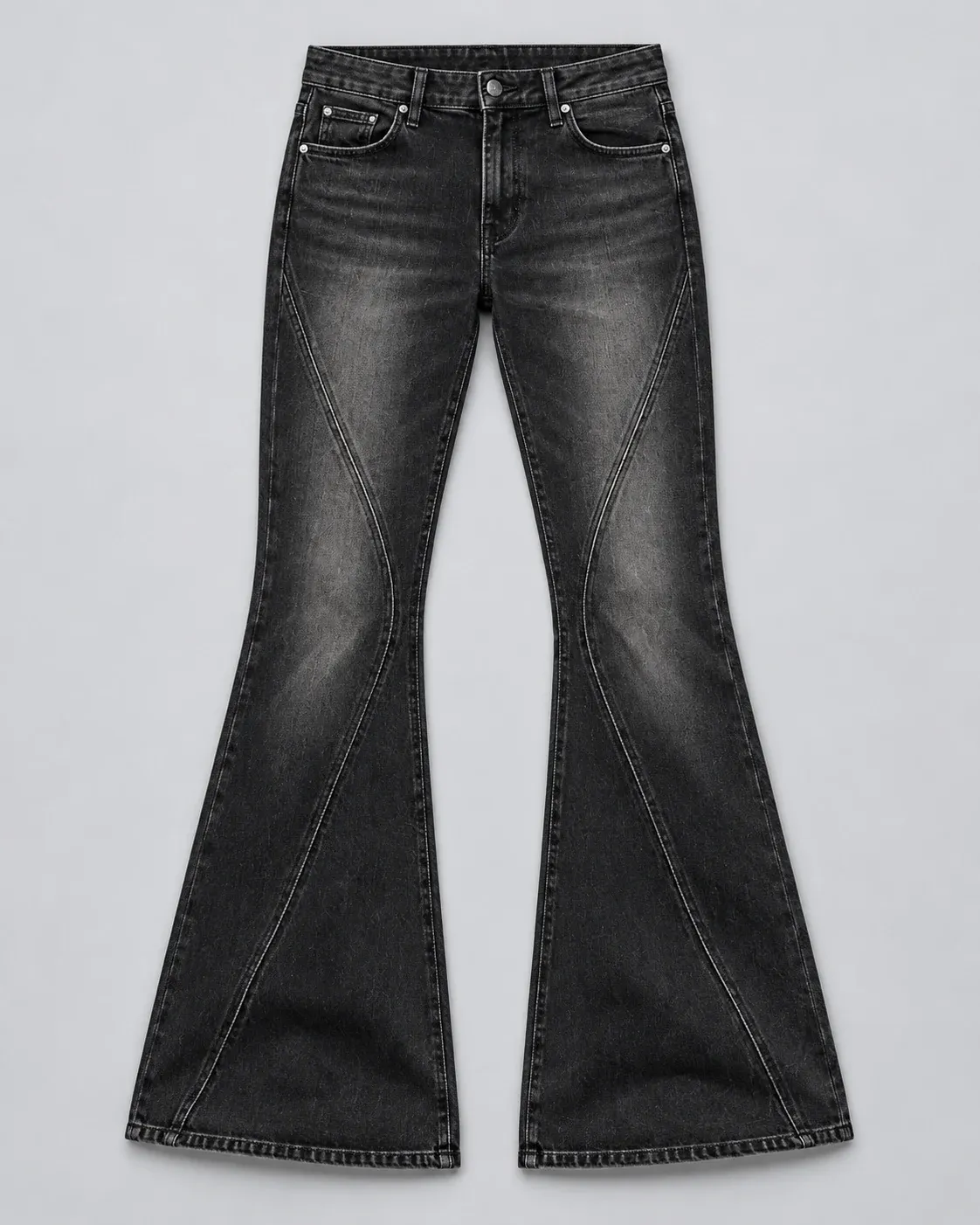
Tapered
Room at the hip, narrowing to a closer hem.
Watch for: The hem opening has to clear the foot. Check it on a fitted sample.
Start a brief with thisStraight
Relaxed through the thigh and falling straight to the hem.
Watch for: Inseam sets the break over the shoe. Agree it with the shoe in mind.
Start a brief with thisWide
Generous from the hip down, with a heavy, open hem.
Watch for: Width and fabric weight work together. Review the drape on a sample.
Start a brief with thisFlared
Fitted through the thigh and knee, then opening to a wide hem.
Watch for: The knee point sets the whole shape, so mark where the flare should start.
Start a brief with thisDirections to compare, drawn in proportion. We confirm what is feasible for your project.
What to send, what we check
Six decisions to settle on a pair of jeans
You don't need every answer. Send what you know and flag what you'd like help with.
| Decision | Tell us | Checked on the sample |
|---|---|---|
| Leg shape | Tapered, straight, wide or flared, with a reference. | Leg line, worn, with shoes. |
| Rise and fit | Rise, seat and thigh, or a pair of jeans to measure. | Where the waist sits, and the fit through the seat. |
| Fabric | Colour, weight if you know it, and rigid or stretch. | Handfeel and how the fabric responds to the wash. |
| Wash | A reference for depth of colour, fades and any distressing. | The wash on your fabric, approved before bulk. |
| Hardware and stitching | Button, rivets, zip or button fly, and thread colour. | Finish, contrast and placement on the garment. |
| Labels and details | Back patch, pocket stitching and any embroidery or print. | Placement, and how each detail survives the wash. |
Measuring jeans you like?
Button them up and lay them flat with the front creases together. These numbers set the fit.
- WaistAcross the top of the waistband, buttoned.
- Front riseCrotch seam to the top of the waistband.
- InseamCrotch seam to the hem.
- ThighAcross the leg at the crotch.
- HemAcross the leg opening.
What is the minimum for denim?
MOQ starts from 100 pairs per style and wash. Fabric, wash and construction can change that minimum, so tell us the quantity you have in mind for each.
Can you match a wash from a photo?
A photo is a useful starting point, but screens and lighting change how a wash looks. Send a physical pair if you have one. Wash effects are approved on your sample.
Do you take denim fabric from the customer?
Tell us in your brief if you already have a fabric in mind or in hand, and we will say how we can work with it.
How is a sample approved?
We record feedback on fit, measurements, fabric, wash and construction, agree any revisions, and you approve the final specification before bulk.
A wash can move the measurements.
Fabric can change size when it is washed, so the pattern has to allow for it. Measure the sample after the wash, not before, and approve the wash and the fit on the same pair.
What to send for your pair of jeans
- A leg reference, or a pair of jeans to measure
- A wash reference, in daylight if it is a photo
- Hardware, stitching and label details
- Quantity per style and wash, and destination