Hoodie manufacturing for independent brands
Custom Streetwear Hoodie Manufacturer
Shape the hood, body and rib as one
A hoodie has more moving parts than any other top. Change the body length and the pocket, rib and artwork all have to move with it, so we settle them together on one sample.
From 100 pieces per style and colour. Fabric, finish and construction may affect minimums.
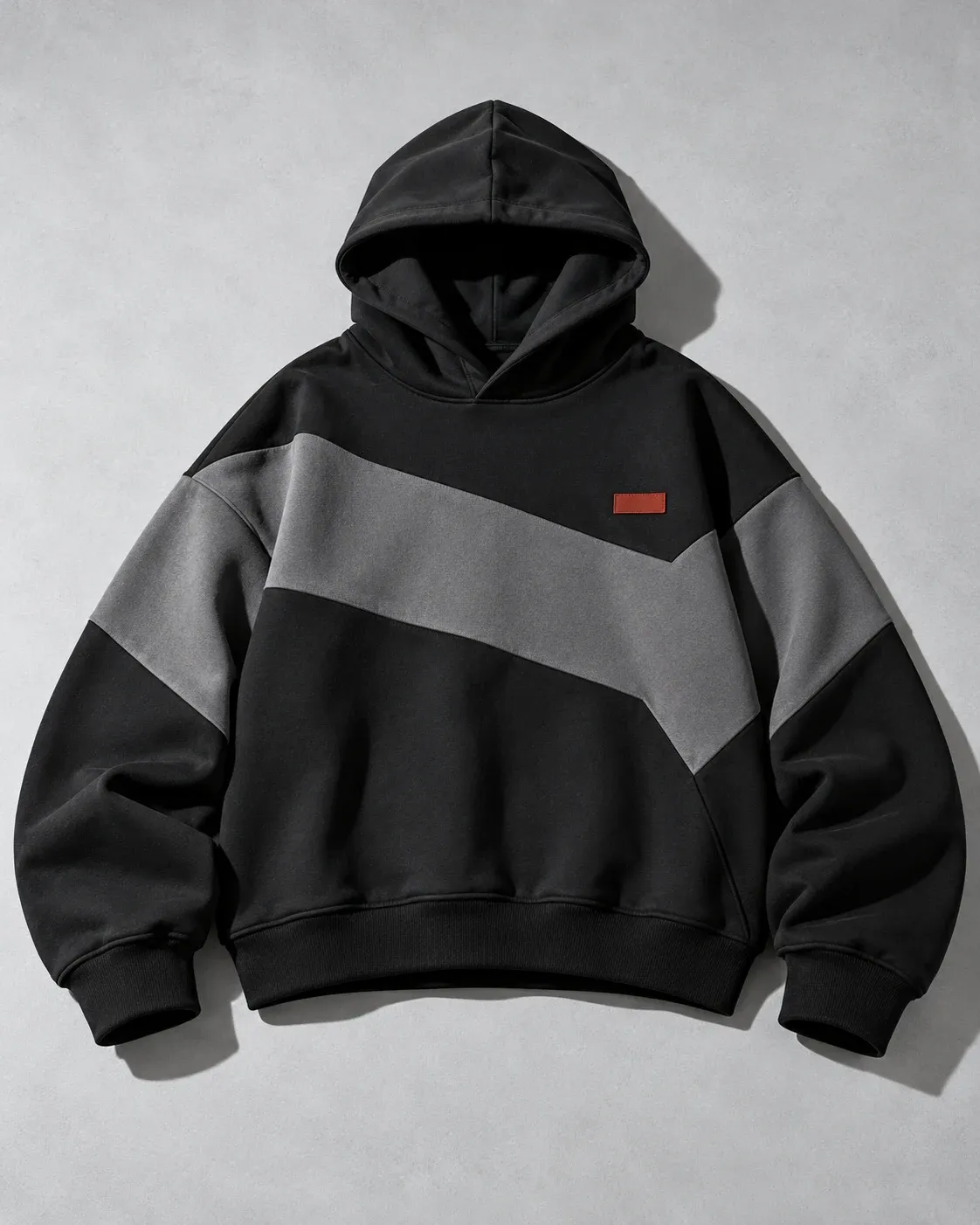
What to read in this garment
- Structured hood No drawcords, stands open
- Angled panel Runs across chest and sleeves
- Woven-look patch Small identity detail on the panel
- Deep rib hem Pulls the body in
Compare the build
Change one part and the rest of the hoodie moves
Three common builds. Each one puts the pocket, rib and hood in a different relationship with the body.
Pullover, kangaroo pocket
The pocket sits across the front, so its width has to agree with the chest and the rib below.
Watch for: Artwork above the pocket has less height than it looks in a flat mockup.
Start a brief with thisShort body, deep rib
A shorter body and deeper hem rib pull the silhouette up. No drawcords keeps the front clean.
Watch for: The pocket gets shallower as the body shortens. Check that it still works.
Start a brief with thisZip front, split pockets
The zip divides the front. Pockets move to the sides and the hood opening changes.
Watch for: Artwork can't cross the zip without a plan for how it lines up.
Start a brief with thisDirections to compare, drawn in proportion. We confirm what is feasible for your project.
What to send, what we check
Six decisions to settle on a hoodie
You don't need every answer. Send what you know and flag what you'd like help with.
| Decision | Tell us | Checked on the sample |
|---|---|---|
| Hood | Height, depth, and whether it stands up or falls flat. Note lining and drawcords. | Shape worn and at rest, and how it meets the neckline. |
| Body and sleeve | Chest width, body length and sleeve volume, or a garment to measure. | Proportion with the hood up and down. |
| Type, width and where it sits above the rib. | Width against the chest, and whether it still works after any length change. | |
| Rib | Hem and cuff depth, and whether the hem should grip or sit loose. | How the hem and cuffs hold the shape. |
| Fabric | The inside feel you want: looped terry or brushed fleece. GSM if you know it. | Handfeel and structure on swatches, then in the made-up garment. |
| Decoration | Method, placement, and anything that crosses a pocket, seam or zip. | Result on the actual fabric, front and reverse. |
Measuring a hoodie you like?
Lay it flat with the hood down. These measurements give us the proportions to start from.
- ChestArmpit to armpit, 1 inch below the armhole.
- LengthHigh point of the shoulder to the bottom of the rib.
- SleeveShoulder seam to end of cuff.
- Hood heightNeck seam to top of hood.
- PocketWidest point across the pocket.
- Hem ribDepth of the rib, top to bottom.
Can artwork cross the pocket or zip?
Mark the exact placement in your brief. Construction changes how decoration lines up, so we check it on the sample rather than from a mockup.
Can I use a zip-front reference?
Yes. Send the reference and describe the zip, hood and pocket construction so we can check feasibility.
What affects minimums and timing?
Fabric, decoration and construction, looked at together. The starting quantity is 100 pieces per style and colour. Samples take 7–10 days. Bulk production takes 25–30 days. The schedule for your project is confirmed after specification review.
Terry or fleece is a decision about the inside.
French terry has a looped reverse. Fleece has a brushed one. Both can be cut into the same hoodie and they will feel different and hold shape differently. Tell us how it should feel worn, and compare swatches before you settle on a weight.
What to send for your hoodie
- Front, back and side views, with the hood up if you can
- Hood, pocket and rib notes
- Artwork at final size, marked on the garment
- Quantity per style and colour, and destination