Tracksuit and jogger manufacturing for independent brands
Custom Streetwear Tracksuit Manufacturer
Define the set before the quantity
Two garments have to read as one outfit, and the order has to be counted the same way on both sides. Start by saying what a set includes, then choose the leg, waistband and fabric pairing.
MOQ from 100 sets per style and colour. Fabric, finish and construction requirements may change minimums.
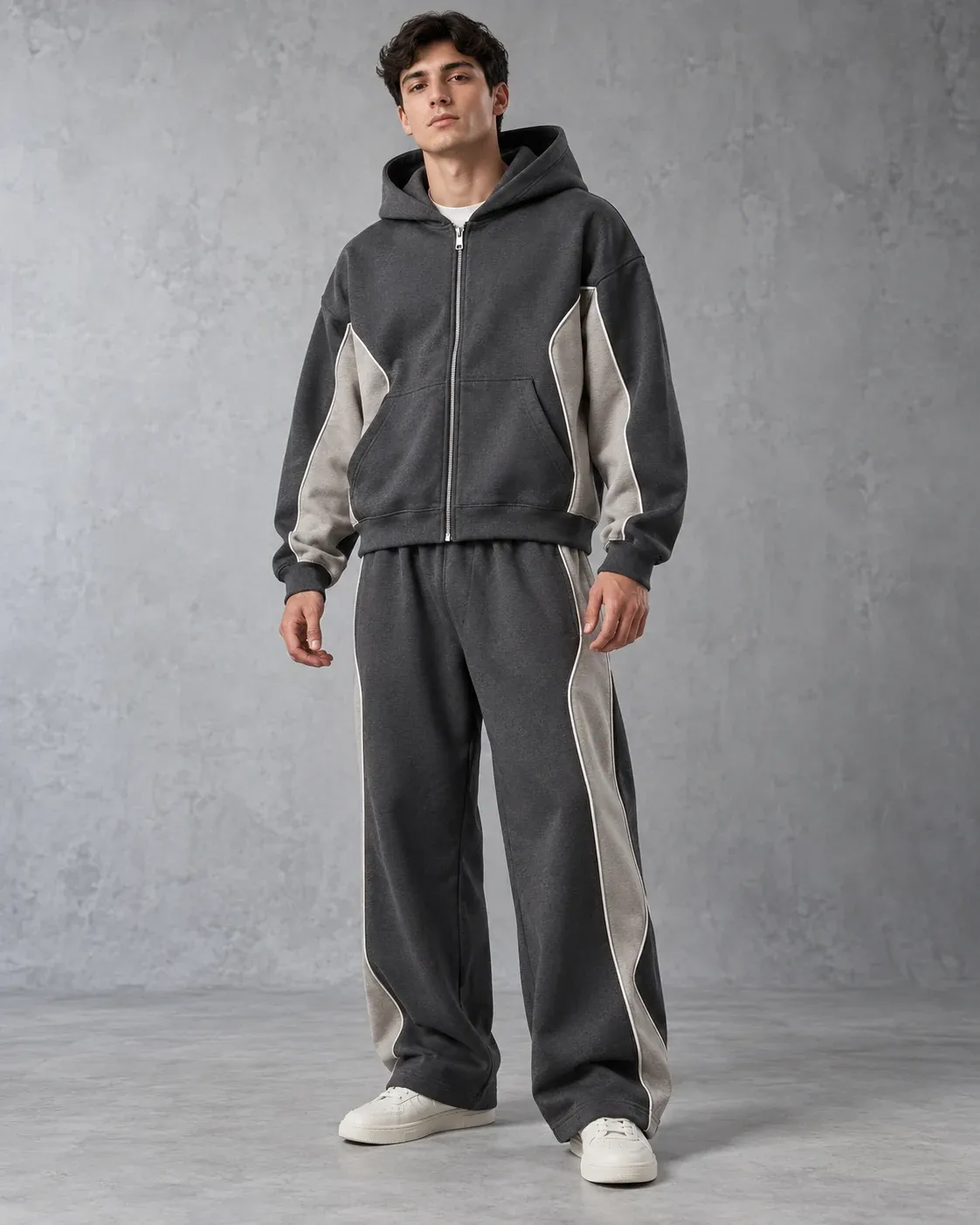
What to read in this set
- Zip-front hood Short body, dropped shoulder
- Side panels Contrast colour with piping
- Waist and hem Top stops at the waistband
- Wide leg Panel runs to an open hem
Compare the leg
“Jogger” can mean four different pairs of trousers
The leg shape decides how the top should be proportioned, so choose it early. Send a reference for whichever is closest.
Cuffed
Tapers to a rib cuff. The ankle stays visible and the hem holds its place.
Watch for: Cuff depth and grip change how the leg stacks.
Start a brief with thisStraight
Falls from hip to hem with an open, hemmed finish.
Watch for: The length needs agreeing, because nothing holds it at the ankle.
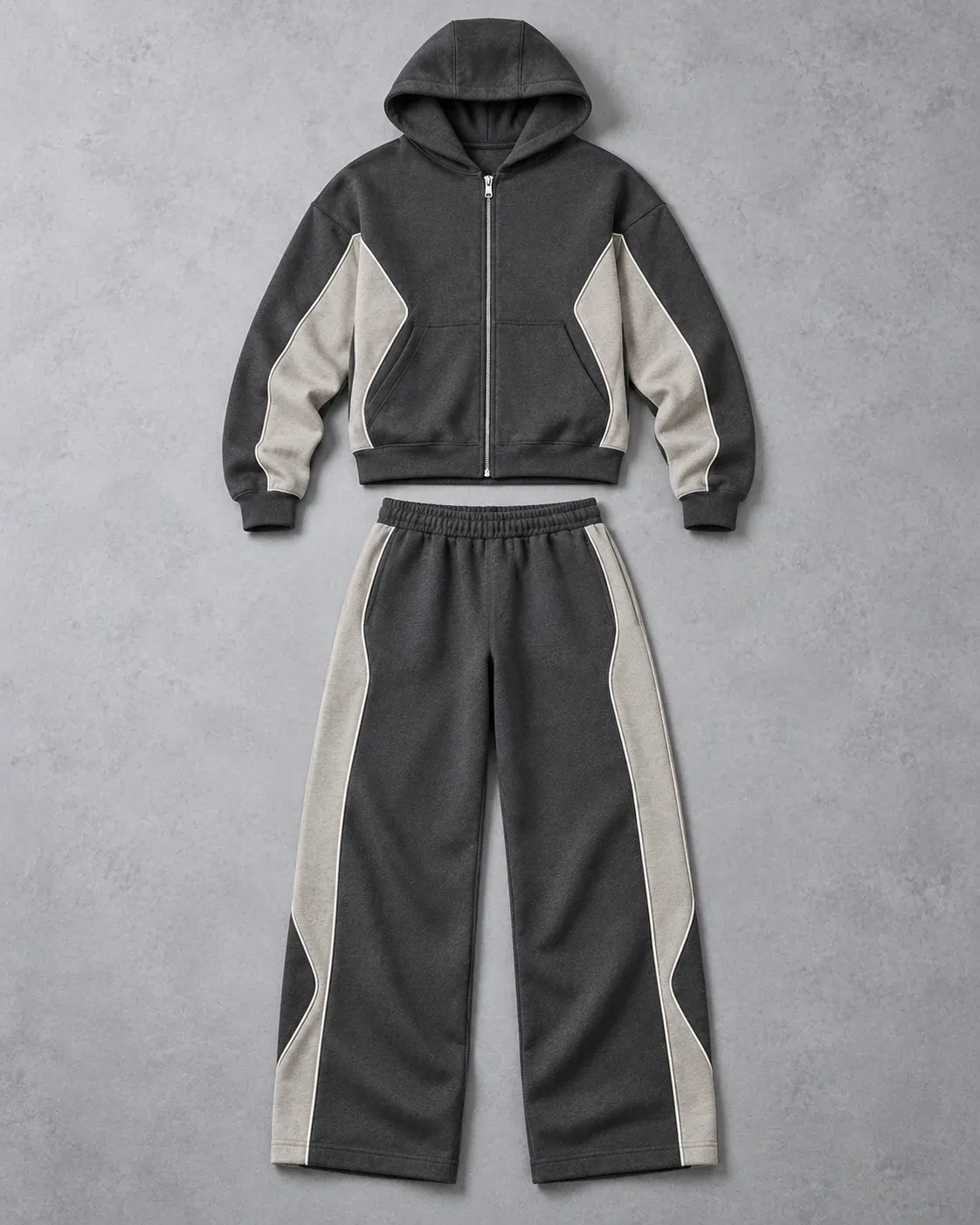
Start a brief with thisWide, open hem
Generous through the leg, with an open hem. Side panels can follow the outline.
Watch for: The width has to balance with the top, so review them together.
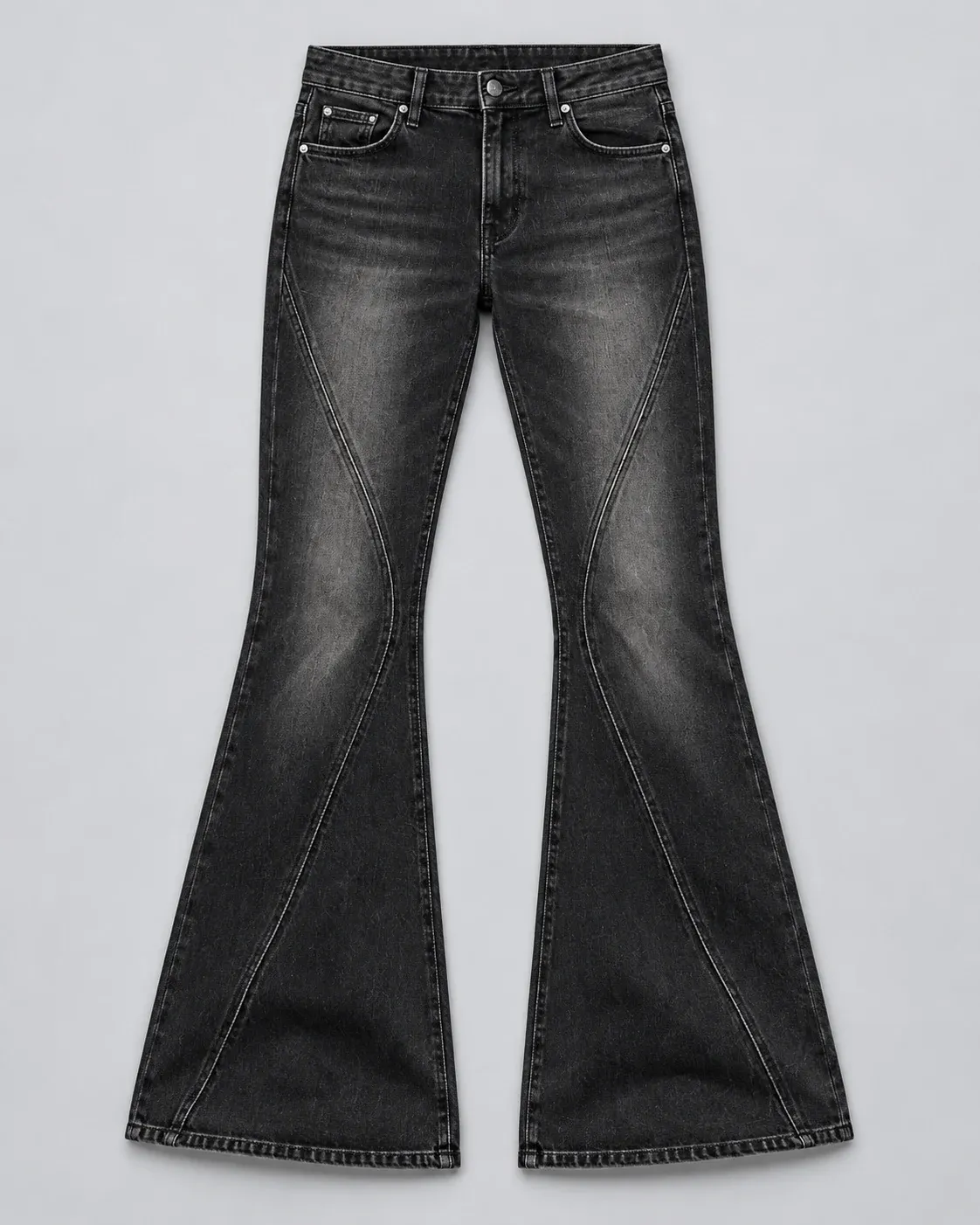
Start a brief with thisFlared
Fitted through the thigh and knee, then opening to a wide hem. Curved seams can follow the line.
Watch for: The knee point sets the whole shape, so mark where the flare should start.
Start a brief with thisDirections to compare, drawn in proportion. We confirm what is feasible for your project.
Define the set
One set is whatever you say it is
Write the set out piece by piece. A top with two bottom options is a different order from a single matching pair, and it changes the quote.
What to send, what we check
Six decisions to settle on a set
You don't need every answer. Send what you know and flag what you'd like help with.
| Decision | Tell us | Checked on the sample |
|---|---|---|
| Set contents | Exactly which top and which bottom make one set. | That both pieces read as one outfit. |
| Leg shape | Cuffed, straight, wide or flared, with a reference. | Leg line, worn, against the top. |
| Waist and rise | Waist, rise and inseam direction. Note elastic and drawcord. | Where it sits, and how it stays there. |
| Pockets | Type, opening and depth. | Pocket opening against the side seam or panel. |
| Fabric and colour | Which fabric goes where, and the colour target. | Top, bottom and rib side by side under the same light. |
| Sizes | Separate size breakdowns for tops and bottoms if they differ. | Size spread for both pieces before quotation. |
Measuring trousers you like?
Lay them flat with the front creases together. These numbers set the leg.
- WaistAcross the top of the waistband, relaxed.
- RiseCrotch seam to the top of the waistband.
- InseamCrotch seam to the hem.
- ThighAcross the leg at the crotch.
- HemAcross the leg opening.
Is the starting minimum 100 sets?
Yes, from 100 sets per style and colour. Fabric, finish and construction can change that minimum, so tell us exactly what one set includes.
Can you develop standalone joggers?
Share the reference, leg shape, waistband and pocket details, along with piece quantities per style and colour.
Can tops and bottoms use different size breakdowns?
Yes, list them separately. We look at the order structure before we quote.
Will different fabrics match exactly?
Don't assume they will. Different structures can look different at the same colour target, so approve the pairing physically.
Two fabrics won't always look like one.
Top, bottom and rib can use different structures, and those structures catch light differently even at the same colour target. Approve the combination on physical swatches and the full outfit, not on a screen.
What to send for your set
- What one set includes, piece by piece
- Pieces or complete sets, per style and colour
- Separate size breakdowns if tops and bottoms differ
- Leg shape reference and destination